

WELCOME TO SNOWCANYON CLINIC BLOG
Medical World Blog
Medical World is dedicated to providing information about topics in the medical science and medical technology sector.
A better health for all is a growing problem in the world, particularly in poorer countries. Medical research and health research therefore is also responsible for global health care.
Health research can well-aimed contribute to significantly improve medical care.
Due to technological developments and increasing knowledge modern medical research is becoming increasingly complex. For this reason, researchers increasingly bundle their knowledge and medical discoveries into larger consortia with partners from different countries. Collaboration often goes beyond Europe and includes countries such as Canada, the USA and others. Their common goal is to improve the medical technology to improve the treatment options for all patients.
Medical World provides you with news on medicine with up-to-date articles on studies and discoveries in the field of medicine and medicine technology.
Medical World News and Events
Various information about medical findings and medicine technic
RECENT POSTS
Control your Type 1 Diabetes with New Technology
There is no cure for type 1 diabetes and many find it challenging to manage this condition. Scientists have come up with a new technology to help better control your type 1diabetes.
Statistics show an alarmingly increased rate of this disease, especially in children.
Type 1 diabetes can fundamentally affect an individual's life, as individuals need to screen their glucose levels consistently to guarantee they are not dangerously high or low.
Individuals with type 1 diabetes measure their glucose levels by pricking a finger a few times each day or wearing a glucose screen. Contingent upon the estimations, they may need to direct insulin utilizing an infusion or insulin pump.
But now scientists are trying a new technology that could replace the traditional methods.
Automatic Insulin System
They targeted a particular kind of artificial pancreas, a closed circle control. These gadgets consistently screen and regulate blood glucose levels. At the point when the screen identifies that an individual needs insulin, a pump discharges the hormone into the body. This trial included the utilization of the Control-IQ system, another kind of fake pancreas that utilizes calculations to modify insulin dosages consequently for the duration of the day.
Specialists needed to replicate everyday life, so they didn't screen the system remotely. Members however contacted researchers at regular intervals to check information from the gadget.
By simplifying the type 1 diabetes management, this innovation could diminish the every day burden of this condition, while likewise conceivably lessening diabetes complications, such as eye and kidney diseases.
Relieving the Burden
The specialists wanted to measure the time that blood glucose levels reached the targeted 70 to 180 milligrams for each deciliter.
The outcomes indicated that the glucose levels of the individuals who utilized the Control-IQ system were in the objective range for about 2.6 hours per day longer than before.
Fundamentally, the system likewise improved the blood glucose control at night just as during the day. This is an essential progression for individuals whose levels drop altogether when sleeping.
More importantly none of the members experienced extreme hypoglycemia when glucose levels become low.
According to researchers these discoveries show that this innovative system can possibly improve the overall health of individuals living with type 1 diabetes, while likewise posibly relieving the burden from those with the disease and their guardians.
The device was just approved for use by the Food and Drug Administration. It will reach patients in January 2020.
Digital Technologies in Dental Aesthetic
Digital dentistry which includes state-of-the-art technologies is no longer a fashion, but a necessity.
It offers significant advantages over conventional dental medicine like a more efficient and precise treatment and a much higher predictability level of the final result.
X-rays with a much lower radiation level, a perfectly integrated smile with the face’s features, dental reconstructions performed in record time, even less than 24 hours; these are just a few examples of what modern dental technology can do.
The number of people who have requested complex dental treatments, especially from the field of dental aesthetics has increased in recent years and with demand the supply has also improved. To meet the high demands of the patients, the dental services market has turned to the development of implantology and dental aesthetics through the specialization of doctors and endowment with the latest generation equipment through which they can offer integrated services at international standards.
The aim of a completely computerized way to deal with replicating functional and aesthetic parameters in full arch implant supported restoration procedure is to fully digitalize the entire process.
Digital Technology Benefits
No digital technique is perfect and cannot replace the human hand but the digitalization of dentistry and techniques greatly improves the quality of the prosthetic work greatly fluidizing the steps the patient goes through.
- The tests done are much less as well, as few as two sessions needed to obtain the desired prosthetic work, so the time is reduced to a minimum.
- The processing of prosthetic parts, faster and more accurate, can be done with the help of digital processing equipment and new materials such as zirconium or ceramic type E- Max.
- The finishing of the prosthetic parts is more precise being done by the most advance CADCAM technology. Moreover, nowadays there are special software systems and all digital protocols for dental aesthetics.
- The benefits of digital technologies are felt by the patient from the first session when instead of the classic impression with classic materials hard to bear in the oral cavity he will have a digital scanning.
- Better communication with the patient by being able to visualize their own images and analyze together the contour, symmetries and proportions of the teeth and discuss about possible problems and expectations; in one word, involving the patient in all the steps of the process.
Most Innovative Dentistry Technologies
CADCAM - innovation that enables dental restorations, for example, crowns, veneers, trims and on-lays to be manufactured utilizing electronic processing technology. Dental specialists work with in-office CADCAM to finish same-day tooth rebuilding, efforts that would otherwise require at least two visits to finish. On the other hand, if your case is more complicated, the specialist may work with a dental research facility that uses CADCAM innovation to make the restoration.
New Antibacterial Shark-skin inspired Surface Technology
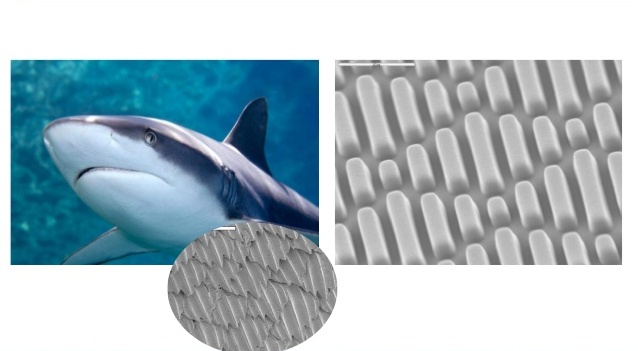
A real innovative surface technology, known as the Sharklet, has been introduced by Sharklet Technolgies Inc. This surface design is inspired by the skin of a shark and reduces bacterial growth without causing resistance, and thus helps protecting for damaging biofilms and microorganisms.
The shark skin technology consists of a series of micro-sized bars interlocking in a diamond pattern. The most important and unique feature of the material is that bacteria accumulation is prevented purely by its surface structure and no chemicals have to be added.
The technology will be mainly used for hospital surface coatings and medical devices.
For which products the Sharklet micropattern design could be beneficial are momentarily being evaluated. Sharklet Technologies has currently partnered up with a medical device firm from China in order to clinically test the micropattern surface technology. This Chinese firm called Peaceful Union wants to advance developing the Sharklet for medical purposes and the surface is now going to clinical trial.
The Sharklet micropattern has shown promising results in clinical pilot studies for further products in the near future.
Sharklet Technologies created the Sharklet in 2007 when a research started about prevention of the coating by algae of marine surfaces, like Naval ships, led to the shark skin pattern. By researching which marine animals skin were not fouling, the unique structure of the sharks skin became apparent.
By experimenting the skin structure was transformed in the Sharklet pattern, It was discovered that no bacterial biofilms were forming on the sharklet pattern and this lead to discovering that no E. coli bacteria were sticking to the pattern and this led to Sharklet Technologies Inc.
The conventional way of killing microorganisms by using disinfectants and antibiotics has led to the creation of resistant bacteria like MRSA for instance. This makes new strategies for managing bacterial growth necessary. By the prevention of bacterial accumulation and growth to begin with, the Sharklet is the perfect solution for this problem.
Medical World
Find interesting articles about medical topics